
- All
- Product Name
- Product Keyword
- Product Model
- Product Summary
- Product Description
- Multi Field Search

Views: 232 Author: EZ-Therapylight Publish Time: 2026-07-07 Origin: Site


Content Menu
● Understanding Red Light Therapy
>> How Red Light Therapy Works (Mechanism)
● Understanding Saunas (Traditional & Infrared)
>> How Saunas Work (Mechanism)
● Red Light Therapy vs Saunas: Key Differences
>> Core Differences at a Glance
● Benefits: When Red Light Therapy Shines
>> UX Perspective: What Users Feel
>> UX Perspective: What Users Feel
● Red Light Therapy vs Saunas for Modern Wellness Brands
>> Positioning for Light Therapy & Biohacking Brands
● Safety, Contraindications and User Education
>> Safety Profile of Red Light Therapy
● Product Strategy: Panels, Wraps and Saunas
>> Red Light Therapy Devices: Panels, Wraps and Masks
>> Sauna Devices: Cabins and Blankets
● Expert Manufacturer Insight: Why Many Brands Start with Red Light
● Practical Use Scenarios: Choosing Between Red Light Therapy and Saunas
>> For Individual Biohackers and Home Users
>> For Clinics, Gyms and Wellness Studios
● OEM/ODM Considerations for Light Therapy & Wellness Brands
>> What Global Brands Should Ask Their Manufacturer
● Action‑Oriented Recommendations
>> How to Decide: A Simple Framework
● CTA for Light Therapy & Wellness Brands
● FAQs
Red light therapy and saunas are both powerful wellness tools, but they work in fundamentally different ways and serve different brand positioning and user needs. From a manufacturer and biohacker perspective, red light therapy offers targeted, evidence‑based photobiomodulation, while saunas provide whole‑body thermal stress and detox support. [therapy-light]

This guide is written from the dual perspective of a biohacking user and a Chinese OEM/ODM light therapy manufacturer. It compares "red light therapy" vs "saunas" in terms of:
- Mechanism of action
- Key benefits and use cases
- Safety and contraindications
- Device selection and product strategy for brands
- OEM/ODM considerations for Light Therapy & Wellness businesses
The goal is to help wellness, health and biohacking brands choose the right technology stack – or a smart combination of both – for their next product line or clinical offering. [therapy-light]
Red light therapy (RLT) uses specific red and near‑infrared wavelengths (typically around 630–660 nm and 800–850 nm) delivered via LEDs or laser diodes to stimulate cellular processes without heating tissue significantly. This process is known as photobiomodulation, and it primarily targets the mitochondria to increase ATP production and modulate oxidative stress. [ideatherapy]
In practical terms, users experience RLT as a non‑invasive, low‑heat light exposure session, usually at close distance from a LED panel, wrap, mask, or bed. [therapy-light]
At a cellular level, red and near‑infrared light:
- Is absorbed by cytochrome c oxidase in mitochondria. [ideatherapy]
- Increases ATP production, supporting energy‑dependent repair processes. [ideatherapy]
- Modulates reactive oxygen species (ROS) and inflammatory pathways. [ideatherapy]
- Influences blood flow and microcirculation in targeted tissues. [ideatherapy]
Because the effect is dose‑dependent and wavelength‑specific, device engineering (wavelength, irradiance, dosage, treatment time) is crucial for brands aiming at measurable clinical or consumer results. [therapy-light]
A sauna is a controlled high‑heat environment that elevates core body temperature through either:
- Traditional (Finnish) saunas – high ambient temperature, usually 70–100°C, with heated stones and optional steam.
- Infrared saunas – lower ambient temperature but deep tissue heating using infrared emitters. [infraredsauna]
Users sit or lie in the cabin for 15–30 minutes, experiencing intense sweating, cardiovascular activation, and thermal stress. [infraredsauna]
Saunas primarily rely on thermal effects, including:
- Elevation of core temperature and skin temperature.
- Increased heart rate and circulation similar to moderate exercise.
- Sweating and vasodilation, supporting fluid and electrolyte shifts and subjective detoxification. [infraredsauna]
Unlike red light therapy, which is non‑thermal and wavelength‑specific, saunas drive systemic responses through heat stress, engaging cardiovascular, endocrine, and thermoregulatory systems. [infraredsauna]
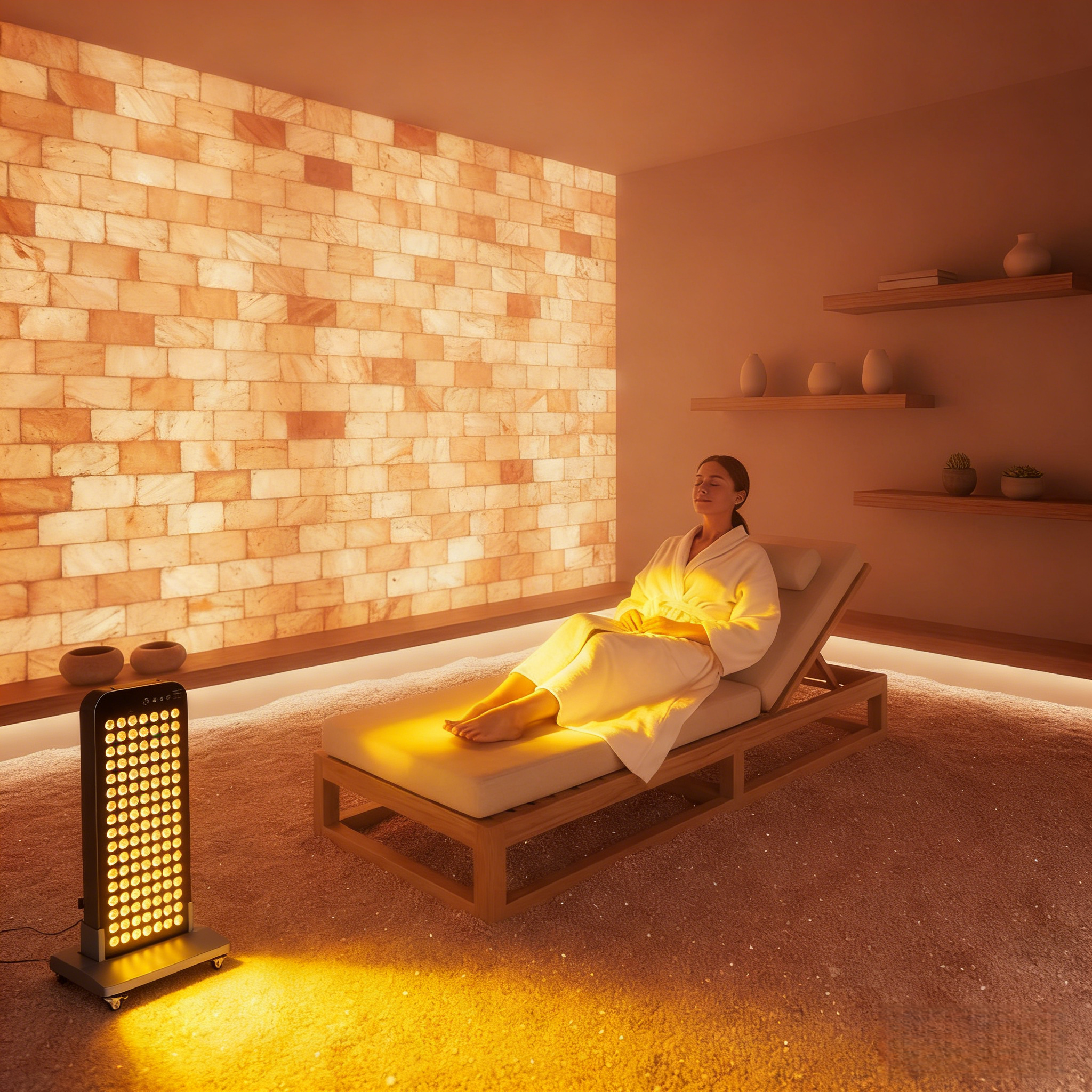
| Aspect | Red Light Therapy | Saunas (Traditional & Infrared) |
|---|---|---|
| Primary mechanism | Photobiomodulation via specific red/NIR wavelengths. (ideatherapy) | Whole‑body heat stress and sweating. (infraredsauna) |
| Targeting | Localized, can be very precise (face, joints, back). (therapy-light) | Systemic, affects entire body and cardiovascular system. (infraredsauna) |
| Heat level | Low to mild heat; often comfortable for sensitive users. (ideatherapy) | High heat; may be intense for some users. (infraredsauna) |
| Typical session length | 10–20 minutes per area. (therapy-light) | 15–30+ minutes per session. (infraredsauna) |
| Main user goals | Skin, pain, recovery, performance, inflammation. (therapy-light) | Relaxation, detox, cardiovascular conditioning, stress relief. (infraredsauna) |
| Device form factor | Panels, masks, belts, wraps, beds, mats. (therapy-light) | Cabin, room, tent, portable sauna blankets. (infraredsauna) |
| Energy delivery | Light energy (photons) to cells. (ideatherapy) | Thermal energy to body and environment. (infraredsauna) |
| Suitability for clinics | Easy to integrate into targeted protocols. (therapy-light) | Requires dedicated space and infrastructure. (infraredsauna) |
| OEM/ODM complexity | High in optics, LEDs, safety, EMF, certification. (therapy-light) | High in heating technology, materials, safety, ventilation. (infraredsauna) |
From the perspective of modern wellness clinics and biohacking brands, red light therapy is strongest in targeted, local applications, such as:
- Skin health and anti‑aging – supporting collagen synthesis, reducing fine lines and redness. [therapy-light]
- Muscle recovery and performance – shorter recovery time and improved training outcomes for athletes. [therapy-light]
- Pain and inflammation – local joint, tendon, and back pain management. [ideatherapy]
- Hair and scalp wellness – targeted stimulation of follicles in some protocols. [therapy-light]
Because RLT does not rely on high heat, sensitive users, older adults, and individuals with heat intolerance often find it more accessible. [ideatherapy]
From a user experience standpoint:
- Sessions feel gentle, focused, and meditative.
- There is minimal sweating, so treatments can be done before work, during lunch breaks, or around skincare routines.
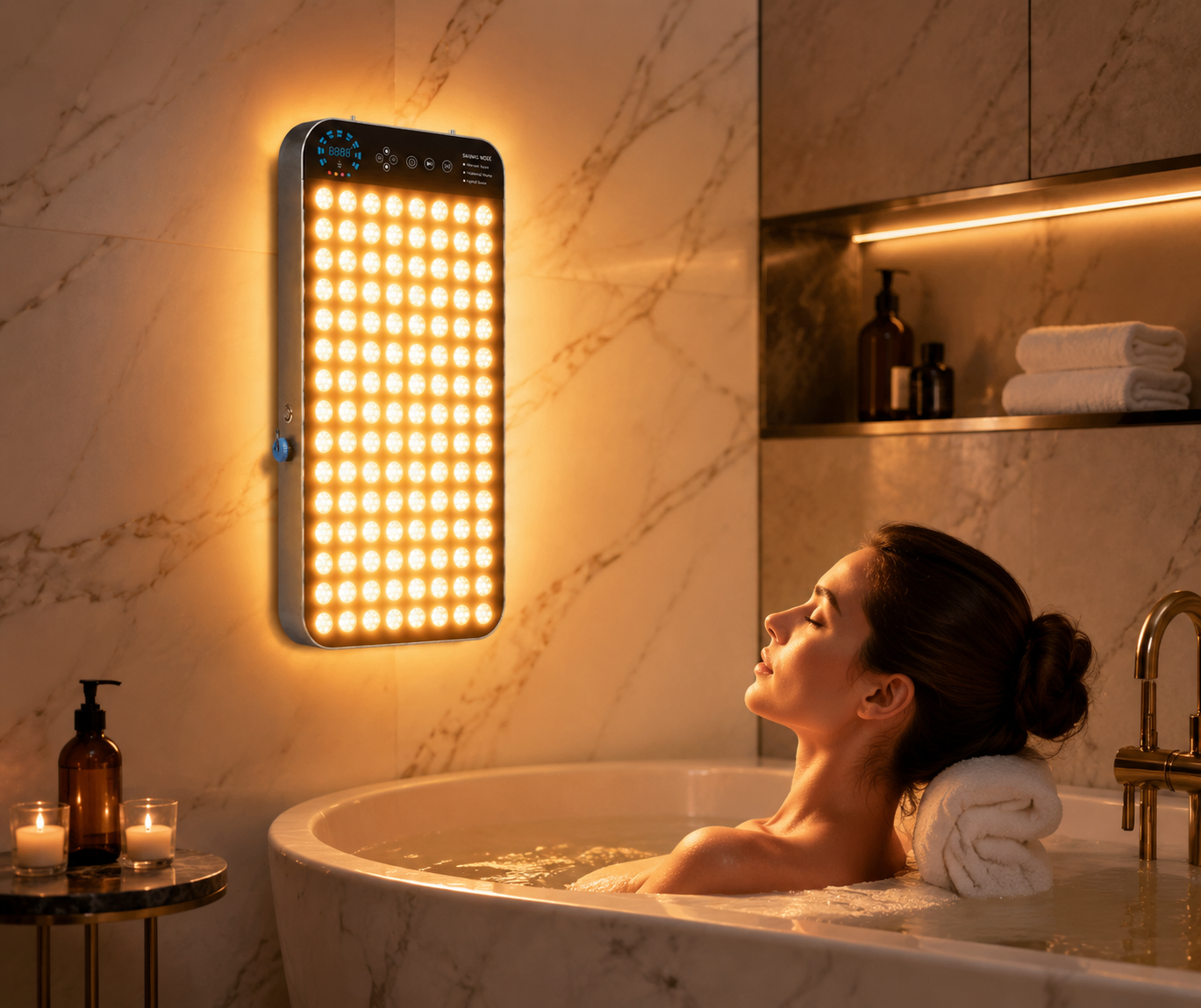
- Devices are easier to integrate into home routines: next to a desk, in a bathroom, or mounted on a wall. [therapy-light]
For brands, this translates into high adherence rates and strong alignment with beauty, performance and biohacking communication. [therapy-light]
Saunas excel in systemic wellness:
- Cardiovascular conditioning – repeated sauna use can mimic some benefits of moderate cardio by increasing heart rate and improving vascular function. [infraredsauna]
- Stress relief and relaxation – heat stimulates endorphin release and promotes deep relaxation.
- Sweating and perceived detox – many users associate intense sweating with detox and "reset" experiences. [infraredsauna]
For wellness clubs, spas and hotels, saunas are also a high‑value experiential asset, building atmosphere and social spaces.
Users typically describe sauna sessions as:
- Intense, immersive and ritual‑like.
- Requiring more time commitment and specific scheduling (after work, weekends).
- Associated with "reward" or recovery moments rather than short daily routines. [infraredsauna]
From a brand standpoint, saunas are a strong fit for premium wellness spaces, but less ideal as compact, productized solutions for global OEM/ODM distribution.
For brands focused on Light Therapy, Wellness, Health, and Biohacking, red light therapy offers several strategic advantages:
- Strong alignment with science‑driven, quantified‑self narratives. [ideatherapy]
- Easier content marketing around specific wavelengths, protocols, and outcomes.
- High potential for stacking with other modalities (skincare, PEMF, cold therapy) without thermal constraints.
Saunas, in contrast, support:
- Holistic relaxation and mental wellbeing positioning.
- Cross‑selling with spa services, massages, and mindfulness programs. [infraredsauna]
Many leading brands combine both – for instance: red light panels inside or alongside an infrared sauna – but the core product DNA and marketing story differ significantly.
Properly engineered RLT systems with correct wavelengths, irradiance and EMF control offer a favorable safety profile when used according to manufacturer protocols. Key points for user education include: [therapy-light]
- Avoid direct eye exposure without proper eye protection.
- Respect dose and distance guidelines to prevent over‑exposure.
- Consider pre‑existing conditions and follow professional advice for photosensitive users. [ideatherapy]
Because RLT is non‑thermal, heat‑related risks are minimal, making it suitable for longer‑term, frequent use in many populations. [ideatherapy]
Saunas, especially at high temperatures, require robust safety education:
- Risk of dehydration and hypotension if users don't hydrate or stay too long. [infraredsauna]
- Not suitable for some cardiovascular conditions or pregnancy without medical guidance.
- Need for controlled session duration, cooling phases, and ventilation. [infraredsauna]
From a UX and risk management standpoint, sauna installations demand clear protocols, signage, and staff training in commercial settings.
Modern OEM/ODM manufacturers now support a full ecosystem of RLT devices, including:
- Wall‑mounted panels for full‑body or partial‑body exposure. [therapy-light]
- Flexible wraps and belts for joints, back and targeted pain relief. [therapy-light]
- LED facial masks for beauty and anti‑aging routines. [therapy-light]
- Beds and mats for professional recovery and high‑end biohacking studios. [therapy-light]
This modularity allows brands to design tiered product lines (entry, advanced, clinic‑grade) without building physical rooms or cabins.
Sauna products are more space‑intensive, often designed as:
- Full cabins for one to multiple users.
- Portable infrared tents and blankets for home users with limited space. [infraredsauna]
While these can be powerful hero products, they typically represent higher logistics costs, installation complexity, and limited SKU diversification compared to LED‑based RLT devices.
From an OEM/ODM manufacturer perspective in China's light therapy sector, there are several reasons why global brands often start with red light therapy devices and later expand into saunas:
1. Regulatory and certification pathways are clearer for well‑defined LED devices, including CE, FCC and similar certifications. [therapy-light]
2. Scalability of production – LED panels, wraps and masks can be manufactured in modular lines and shipped globally with consistent quality. [therapy-light]
3. Customization potential – brands can adjust wavelength combinations, housing materials, smart‑control features, and brand aesthetics without redesigning entire rooms. [therapy-light]
4. Marketing flexibility – RLT supports campaigns in beauty, sports, longevity, and clinical niches simultaneously.
In contrast, sauna projects often require larger initial investment, facility planning, and coordination with construction or interior design partners. [infraredsauna]
If you are a home user or biohacker, consider:
- Choose red light therapy if your primary goals are:
- Skin health and anti‑aging
- Local pain relief and injury recovery
- Daily performance and energy support
- Choose saunas if your primary goals are:
- Deep relaxation and stress relief
- Heavy sweating and perceived detox
- Cardiovascular conditioning and "post‑workout reward"
Many advanced users stack both, using RLT on training days and sauna sessions on recovery or weekend days. [therapy-light]
For professional settings:
- Red light therapy is ideal for:
- Treatment rooms and targeted protocols
- Add‑on services to physiotherapy, aesthetics, sports recovery
- Packages that can be scheduled in short time slots
- Saunas are ideal for:
- Signature wellness experiences
- Membership perks and relaxation zones
- Bundles with other spa services and rituals. [infraredsauna]
A hybrid ecosystem – for example, a red light therapy recovery corner plus a premium infrared sauna zone – often delivers the strongest differentiation and revenue per square meter. [therapy-light]
When sourcing red light therapy devices or considering sauna‑integrated solutions, professional brands should ask:
- Wavelength and power specifications – confirm true 630–660 nm and 800–850 nm ranges with verifiable irradiance data. [ideatherapy]
- Certifications and testing – CE, FCC and third‑party testing for safety, EMF and flicker. [therapy-light]
- Design flexibility – options for housing materials, colors, branding, and smart connectivity. [therapy-light]
- Scalability and lead times – capacity to support global roll‑outs across 16+ countries or more. [therapy-light]
- After‑sales support and technical training – to ensure consistent user experience and safety in clinics and studios. [therapy-light]
For sauna projects, additional questions around installation, insulation, ventilation, and on‑site support become critical. [infraredsauna]
Use this three‑step framework to decide your next hero modality:
1. Define your primary brand promise.
If it is *targeted results*, *performance* and *science‑led innovation*, red light therapy should be the foundation. If it is *slow living*, *relaxation* and *Spa‑like immersion*, saunas may sit at the center.
2. Evaluate your space, logistics and budget.
Limited space and global e‑commerce distribution favor compact LED devices; large flagship locations can better support sauna cabins and multi‑user experiences. [therapy-light]
3. Design a scalable product ladder.
Use RLT panels, wraps and masks as your core product ladder; add sauna offerings later as high‑ticket, experiential upgrades.
If you are a Light Therapy, Wellness, Health or Biohacking brand, wholesaler or producer planning your next product line, now is the ideal time to audit your modality mix and explore OEM/ODM red light devices that complement or even outperform sauna‑only offerings in terms of scalability, targeting and user convenience. [therapy-light]
1. Is red light therapy safer than saunas for everyday use?
Red light therapy is generally more comfortable and accessible for daily use because it relies on non‑thermal, targeted light exposure, whereas saunas involve intense heat and require stricter time and hydration protocols. [ideatherapy]
2. Can I combine red light therapy and sauna sessions?
Yes. Many advanced users and clinics combine both: red light therapy for targeted cellular and tissue benefits, and sauna sessions for systemic heat stress, relaxation and sweating, provided safety guidelines are followed for each modality. [therapy-light]
3. Which is better for skin anti‑aging: red light therapy or saunas?
For direct anti‑aging effects on skin (collagen, fine lines, redness), evidence and user experience tend to favor red light therapy, while saunas primarily support indirect benefits via stress relief and circulation. [ideatherapy]
4. Which modality should wellness brands launch first?
Most global Light Therapy & Wellness brands start with red light therapy panels, wraps or masks because they are easier to scale, certify and ship, and they align well with targeted, science‑driven marketing narratives. [therapy-light]
5. Are infrared saunas the same as red light therapy?
No. Infrared saunas use infrared emitters mainly to produce deep tissue heat and sweating, whereas red light therapy uses specific red and near‑infrared wavelengths at non‑thermal doses to trigger photobiomodulation and targeted cellular responses. [ideatherapy]


