
- All
- Product Name
- Product Keyword
- Product Model
- Product Summary
- Product Description
- Multi Field Search

Views: 222 Author: EZ-Therapylight Publish Time: 2026-05-15 Origin: Site


Red light therapy beds and panels can both deliver clinically relevant red and near‑infrared light, but they differ dramatically in coverage, throughput, experience, and ROI, especially for professional operators. Drawing on my experience working with light therapy brands and on EZ‑Therapylight's OEM/ODM perspective, this guide compares them in depth so you can choose the right hardware strategy for your wellness or biohacking business. [hoogahealth]

Red light therapy—more precisely photobiomodulation (PBM)—uses specific red and near‑infrared wavelengths to stimulate cellular energy production and modulate inflammation. Studies show potential benefits for skin rejuvenation, hair growth, pain relief, tissue repair, sleep, and recovery, especially when dosage and consistency are well controlled. [forbes]
From an operator's perspective, the critical technical variables are:
- Wavelengths (commonly 630–660 nm red and 810–940 nm near‑infrared). [magiquehuaer]
- Irradiance (power density, mW/cm² at the skin). [thehale]
- Treatment time and frequency (minutes per session, sessions per week). [dahliahealth]
- Coverage and consistency (full body vs local, uniformity of dose). [thehale]
Beds and panels can both hit evidence‑based dose ranges when engineered correctly, but the way users experience that dose is very different. [magiquehuaer]
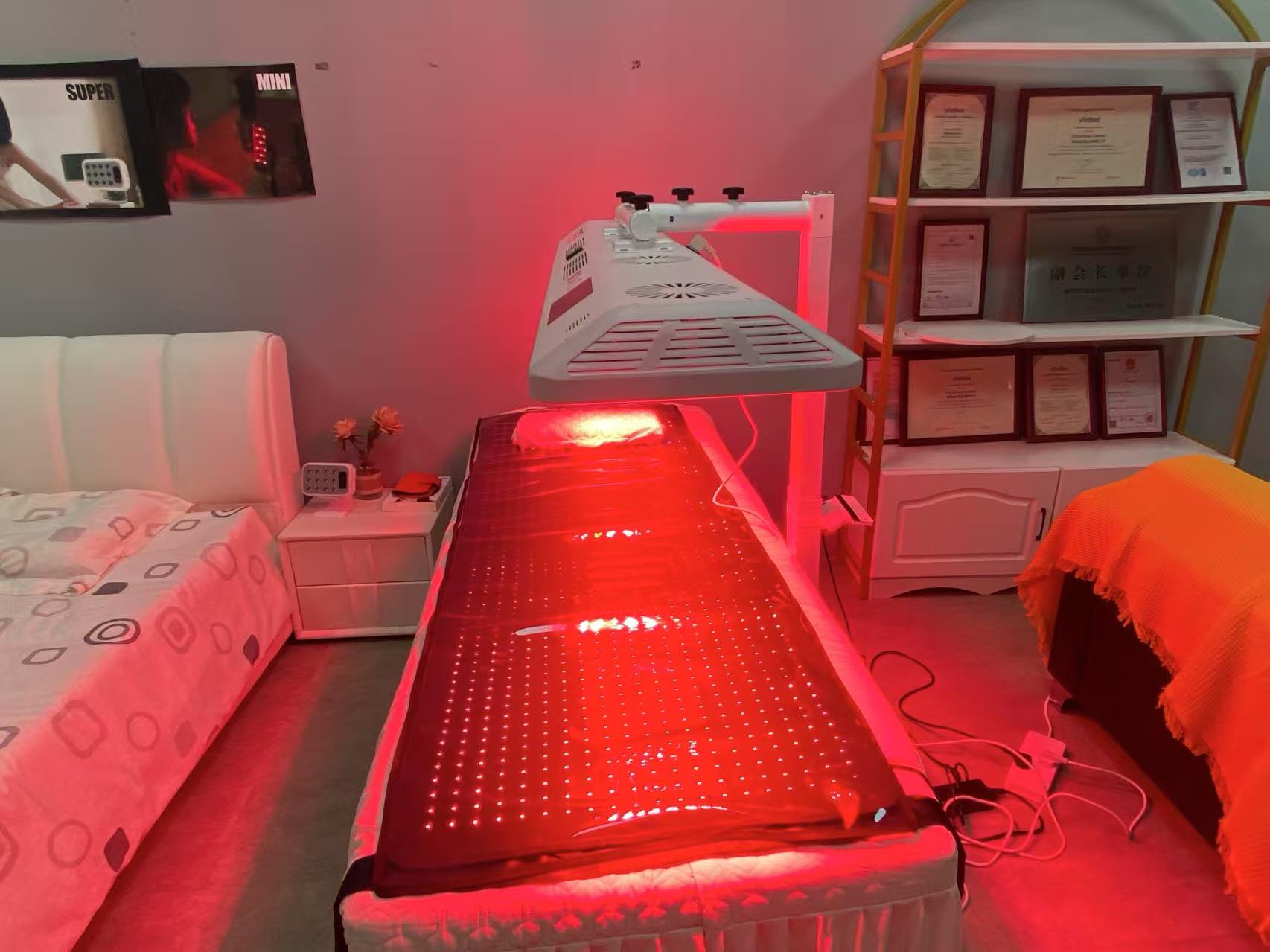
A red light therapy bed is a full‑body enclosure with thousands of LEDs arranged to give 360° coverage when the user lies down. Commercial units often integrate multiple wavelengths (for example 630, 660, 850, 940 nm), ventilation, timers, presets, and sometimes sensor‑driven safety and intensity control. [bodybalancesystemonline]
For clinics, gyms, spas, and wellness centers, the appeal is straightforward:
- 10–15 minute sessions for true full‑body exposure. [forbes]
- Passive, spa‑like experience that feels premium. [bodybalancesystemonline]
- Highly automated, with minimal staff involvement once set up. [dahliahealth]
From the perspective of a manufacturer like EZ‑Therapylight, beds are usually the flagship category: high‑power electronics, robust thermal design, and branded industrial design become key differentiators for OEM/ODM partners. [therapy-light]
- Full‑body coverage and uniform dosing
Beds deliver consistent irradiance across the entire body at a fixed distance, minimizing "hot spots" and "cold spots." This helps clinics standardize treatment protocols and outcomes. [bodybalancesystemonline]
- High throughput and revenue per hour
A full‑body bed can run 4–5 sessions per hour with minimal staff time, so revenue per square meter is often higher than with multiple individual panels. [magiquehuaer]
- Premium, differentiating client experience
Lying in a bed feels more like a high‑end spa or recovery lounge treatment than standing in front of a wall panel. That supports higher pricing, memberships, and bundled programs. [dahliahealth]
- Branding and storytelling value
For wellness franchises and biohacking studios, a full‑body bed is a compelling centerpiece for content, PR, and social media. OEM/ODM partners can integrate custom housings, interface design, and branding to amplify this effect. [therapy-light]
- Higher upfront cost and space requirement
Commercial beds typically sit in the tens of thousands of dollars range and require a dedicated room (often around 8×10 feet or more). This makes them a strategic, not impulse, purchase. [thehale]
- Less flexible for targeted protocols
While you can absolutely run skin, recovery, or metabolic protocols in a bed, localized high‑dose treatments (e.g., a single joint) may still benefit from a dedicated panel or smaller device. [med.stanford]
A red light therapy panel is a flat LED board used at a fixed distance to treat specific body regions. Panels can be: [youlumistore]
- Wall‑mounted in a clinic treatment room.
- Free‑standing on a rolling stand.
- Integrated into rigs that surround the body from multiple sides. [youlumistore]
Panels typically prioritize flexibility, modularity, and cost‑efficiency, which is why they are popular with home biohackers and small studios. [hoogahealth]
- Lower upfront investment
Single or multi‑panel systems often start around a few hundred to a few thousand dollars, well below most commercial beds. This lowers the barrier to entry for new practitioners or early‑stage wellness studios. [youlumistore]
- Modular and scalable
You can start with one or two panels and then scale into larger arrays or partial "cabin" setups as demand grows. For OEM/ODM partners, this also enables a product ladder across multiple price points. [cn.linkedin]
- Excellent for targeted treatments
Panels shine when users want to focus on a face, joint, or specific muscle group, or combine red light with other local modalities (manual therapy, PEMF, etc.). [med.stanford]
- Partial coverage and uneven dosing
Irradiance drops significantly as distance increases and toward panel edges, which can create uneven dosing if users are not positioned correctly. Full‑body coverage with panels alone requires repositioning, which lengthens sessions. [bodybalancesystemonline]
- More active user involvement
The user often has to stand, sit, rotate, or adjust their position multiple times per session to cover all areas. This is manageable for motivated biohackers, but less ideal in a high‑throughput commercial setting. [thehale]
- Lower perceived luxury
Even when the specs are strong, standing in front of a panel feels more clinical and less "wow" compared with a full‑body bed. [magiquehuaer]

Factor | Red light therapy bed | Red light therapy panels |
|---|---|---|
Coverage | Full‑body 360° exposure in one session. bodybalancesystemonline | Local / regional; full‑body requires multiple positions. bodybalancesystemonline |
Dose consistency | Fixed distance and uniform irradiance over the body. bodybalancesystemonline | Falls off with distance; risk of hot/cold spots without guidance. bodybalancesystemonline |
Session length | Typically 10–15 minutes full‑body. magiquehuaer | Often 20–40 minutes to cover multiple areas. bodybalancesystemonline |
Throughput | 4–5 sessions per hour with minimal staff. bodybalancesystemonline | 1–2 sessions per hour, higher staff involvement. bodybalancesystemonline |
User experience | Passive, spa‑like, high‑end. bodybalancesystemonline | More active, clinical, user must reposition. bodybalancesystemonline |
Upfront cost | Higher; often tens of thousands of dollars. bodybalancesystemonline | Lower; hundreds to several thousand dollars. thehale |
Space needed | Dedicated room, fixed footprint. bodybalancesystemonline | Flexible; can fit in smaller rooms. thehale |
Best fit | High‑volume clinics, gyms, spas, premium biohacking labs. bodybalancesystemonline | Home users, boutique studios, targeted therapy rooms. hoogahealth |
From an operator and manufacturer viewpoint, the bed vs panel choice is less about "which is better" and more about which business model you want to build. [dahliahealth]
For high‑throughput, recurring‑revenue environments (franchises, gyms, recovery lounges, multi‑modality clinics), a full‑body bed often delivers:
- Higher price per session and higher perceived value. [bodybalancesystemonline]
- More memberships and packages, especially for body‑wide goals like recovery, vitality, metabolic health, or anti‑aging. [forbes]
- Lower labor cost per session, since staff mostly supervise. [dahliahealth]
For OEM/ODM partners like EZ‑Therapylight, this also creates opportunities to co‑develop exclusive flagships that anchor a brand's offering and support premium positioning across territories. [therapy-light]
Panels can be the better choice when:
- You are testing market demand for light therapy before committing to a bed. [youlumistore]
- You mostly deliver targeted medical or aesthetic procedures and want to integrate red light as an add‑on around the treatment table. [med.stanford]
- You serve home or prosumer markets with smaller budgets and space. [hoogahealth]
Panels also allow faster product iteration—smaller enclosures, fewer tooling costs, easier international logistics—so brands can launch region‑specific SKUs and rapidly test new LED combinations or control features with an OEM like EZ‑Therapylight. [therapy-light]
Regardless of whether you choose beds or panels, there are a few non‑negotiable specs that serious operators and biohackers should look at.
- Focus on red (around 630–660 nm) and near‑infrared (around 810–940 nm), which are the most studied ranges for skin, recovery, and pain. [scientificamerican]
- Aim for moderate irradiance levels that allow clinically meaningful dosing without overheating or increasing risk of misuse. [med.stanford]
Research from academic centers and clinical reviews confirms that dose, timing, and consistency matter more than chasing extreme power levels. Well‑engineered beds and panels both can deliver effective windows of energy when designed by experienced manufacturers. [scientificamerican]
From an E‑E‑A‑T perspective, trustworthy brands and manufacturers:
- Publish clear specs: wavelengths, irradiance at typical working distances, and recommended session protocols. [scientificamerican]
- Integrate thermal management, eye safety guidance, and timers. [magiquehuaer]
- Avoid exaggerated or non‑evidence‑based "miracle" claims and instead reference peer‑reviewed data where available. [forbes]
EZ‑Therapylight, for example, positions itself as a one‑stop OEM/ODM partner with engineering, molding, branding, and packaging support so that global brands can launch compliant, spec‑transparent devices from a single factory base in Shenzhen. [linkedin]
Beds are usually the better fit for:
- Gyms and performance centers wanting a recovery and longevity upgrade.
- Spa and wellness chains that need a "hero" service to attract memberships.
- High‑end biohacking labs offering stacked protocols (sauna + cold plunge + red light).
- Clinics bundling full‑body PBM into packages for chronic pain or inflammatory conditions (with appropriate medical oversight). [thehale]
Panels excel for:
- Home users and biohackers who are disciplined and comfortable with repositioning.
- Aesthetic clinics adding local red light for skin or hair protocols. [hoogahealth]
- Chiropractors or physios wanting a compact, portable tool to integrate with hands‑on work. [med.stanford]
In practice, many professional operators evolve toward a hybrid model: a flagship bed for full‑body sessions plus one or more panels for targeted add‑ons. [bodybalancesystemonline]
From the standpoint of a manufacturing partner like EZ‑Therapylight, here is how serious brands future‑proof their product roadmap. [cn.linkedin]
1. Design a clear product ladder
Pair one or two full‑body beds with a family of panels (face, local, modular full‑body) so end customers can "graduate" from entry‑level to flagship devices as their commitment grows. [youlumistore]
2. Align specs with evidence, not hype
Use wavelength combinations and irradiance that map to emerging research rather than chasing unrealistic power numbers. Publish real measurement data and recommended treatment ranges. [scientificamerican]
3. Engineer for branding and UX from day one
Industrial design, UI/UX, on‑device protocols, and packaging all shape customer trust and perceived value. A strong OEM partner can integrate your brand story—from enclosure color and materials to app integration and content—directly into the hardware roadmap. [linkedin]
Use this quick framework to clarify whether a bed or panel should be your next investment.
1. Volume and business model
- High volume, subscription‑style memberships → Start with a bed.
- Lower volume, high‑touch targeted treatments → Start with panels. [thehale]
2. Available space and capital
- Dedicated room and higher CAPEX budget → Bed is viable.
- Limited space or cautious CAPEX → Panels provide a lower‑risk entry. [magiquehuaer]
3. Brand positioning
- Premium, experiential, results + luxury → A bed supports your story. [dahliahealth]
- Accessible, modular, "biohacking at home" → Panels align better. [hoogahealth]
If your brand is scaling quickly, planning for both categories—leveraging an OEM/ODM partner to share internal components, LED modules, and control platforms—often gives you the strongest long‑term moat. [therapy-light]
Choosing between red light therapy beds vs panels is ultimately a strategic decision about how you want your brand and business model to evolve. With the right OEM/ODM partner, you do not have to choose only one path—you can design a coherent device ecosystem that matches your customers' real‑world journeys. [therapy-light]
If you are planning a new red light therapy line—or upgrading from home‑grade panels to commercial‑grade beds—reach out to EZ‑Therapylight to co‑develop devices that are engineered for clinical performance, UX, and brand growth from day one. [cn.linkedin]
We've launched an waterproof (IP65), -40°~90°C heat/low temperature-resistant light therapy panel specifically built to integrate into saunas room, infrared cabins, hot tub, ice baths, steam baths and showers etc. luxtury wellness space— it delivers red/NIR/amber/blue wavelengths that supports skin rejuvenation, circulation and deep muscle relaxation while withstanding high humidity/heat environment.
If you are interesting for the products and want to know how it improve your business, please inquiry us:
Email: ez@therapy-light.com
WhatsApp: +86 151 1311 0489
1. Are red light therapy beds more effective than panels?
Beds are not inherently more "powerful," but they deliver full‑body, uniform dosing in a shorter, passive session, which often improves consistency and adherence in commercial settings. [bodybalancesystemonline]
2. Can a panel replace a bed for full‑body treatment?
Technically yes, but you will usually need longer sessions and multiple positions to approximate full‑body coverage, which reduces throughput for busy clinics and demands more user effort. [thehale]
3. What does the science say about red light therapy benefits?
Emerging evidence supports applications for skin rejuvenation, hair growth, pain relief, and tissue healing, while data for other claims like athletic performance and sleep is promising but still evolving. [forbes]
4. How many sessions per week do users typically need?
Many protocols use 3–5 sessions per week for several weeks to build results, then shift to maintenance, but exact schedules should be individualized and grounded in available research and clinical guidance. [forbes]
5. What should brands look for in an OEM/ODM partner for red light devices?
Look for a manufacturer with proven LED engineering, transparent specs, regulatory awareness, and the ability to customize housings, controls, and branding so your devices stand out while staying aligned with scientific evidence. [linkedin]
1. Hooga Health. "Red Light Therapy Beds vs. Panels: Which Is Right for You?" [hoogahealth]
2. Peak Primal Wellness. "Red Light Therapy Beds vs. Panels." [peakprimalwellness]
3. Body Balance System. "Red Light Therapy Bed vs Panel: An ROI and Efficacy Guide for Clinic Owners." [bodybalancesystemonline]
4. Hale Health. "Red Light Therapy Panels vs Beds." [thehale]
5. Magique Huaer. "Comparing Red Light Therapy Beds vs Panels: Which Is Right for Commercial Use." [magiquehuaer]
6. Dahlia Health. "Red Light Therapy Bed vs Panels." [dahliahealth]
7. Forbes. "The Billion-Dollar Glow: Red Light Therapy's Astounding Rise." [forbes]
8. Stanford Medicine. "Red Light Therapy: What the Science Says." [med.stanford]
9. Scientific American. "Does Red-Light Therapy Work? What the Research Says." [scientificamerican]
10. Youlumi Store. "Red Light Therapy Beds vs. Panels vs. Mats: A Comparison." [youlumistore]
11. EZ‑Therapylight official site and product pages. [therapy-light]
12. EZ‑Therapylight LinkedIn company profile. [cn.linkedin]
13. Red Light Therapy manufacturer information via LinkedIn. [linkedin]
14. Light Therapy market overview, Menafn. [menafn]


